

Dr. Nephros Clinic, led by Dr. Sujit Nanda, offers expert kidney and dialysis care with compassion and precision.
Kidney Dialysis
Home / Kidney Dialysis
What is Kidney Dialysis?
Dialysis is a medical procedure that helps maintain the body’s chemical balance and prevents complications of kidney failure. It is essential for patients with advanced Chronic Kidney Disease or kidney failure.
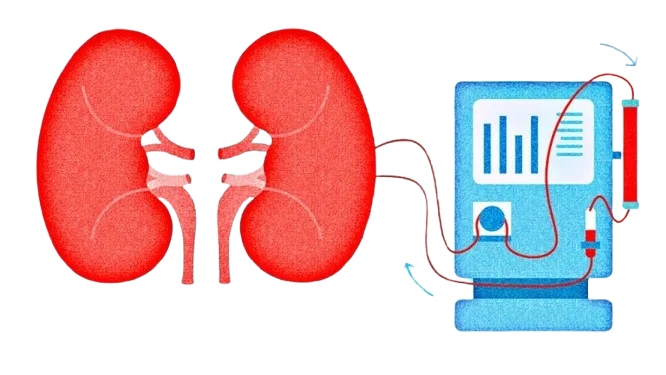
Types of Kidney Dialysis
- Hemodialysis: Blood is filtered through a machine outside the body to remove waste and excess fluids.
- Peritoneal Dialysis: The lining of the abdomen acts as a natural filter, using a special dialysis fluid to clean the blood.
Benefits of Treating Dialysis
- Removes Waste & Toxins: Dialysis effectively eliminates harmful waste products and excess fluids from the blood, preventing dangerous complications.
- Controls Blood Pressure: By balancing fluids and electrolytes, dialysis helps maintain stable blood pressure levels.
- Reduces Swelling: Dialysis removes excess fluid from the body, reducing swelling in the legs, ankles, and other areas.
- Improves Overall Health: Regular dialysis supports better energy levels, proper body function, and quality of life for patients with kidney failure.
Risks and Precautions in Dialysis
- Low Blood Pressure: Rapid fluid removal during dialysis can sometimes cause dizziness, weakness, or fainting.
- Infection Risk: Access points, such as catheters or fistulas, can become infected if not properly cared for.
- Muscle Cramps & Fatigue: Some patients experience muscle cramps, nausea, or tiredness during or after treatment.
- Electrolyte Imbalance: Dialysis may occasionally disturb the body’s electrolyte levels, requiring careful monitoring by healthcare providers.
Treatment Images

